When a critical PLC component fails, every minute of downtime can impact production, delivery schedules and operating costs. While finding a replacement quickly is important, choosing the right supplier is equally critical.
Not all PLC spare parts suppliers offer the same level of product quality, testing, technical support or after-sales service. Whether you’re replacing a failed module or building a strategic spare parts inventory, selecting a reliable supplier can reduce risk and improve long-term equipment reliability.
This guide outlines the key factors every maintenance manager, engineer and procurement professional should consider before purchasing industrial automation components.
Industrial automation equipment plays a vital role in keeping production running. Installing poor-quality or incompatible replacement parts can result in recurring faults, unexpected downtime and additional maintenance costs.
A reliable supplier helps ensure you receive suitable components, dependable support and fast delivery when time is critical.
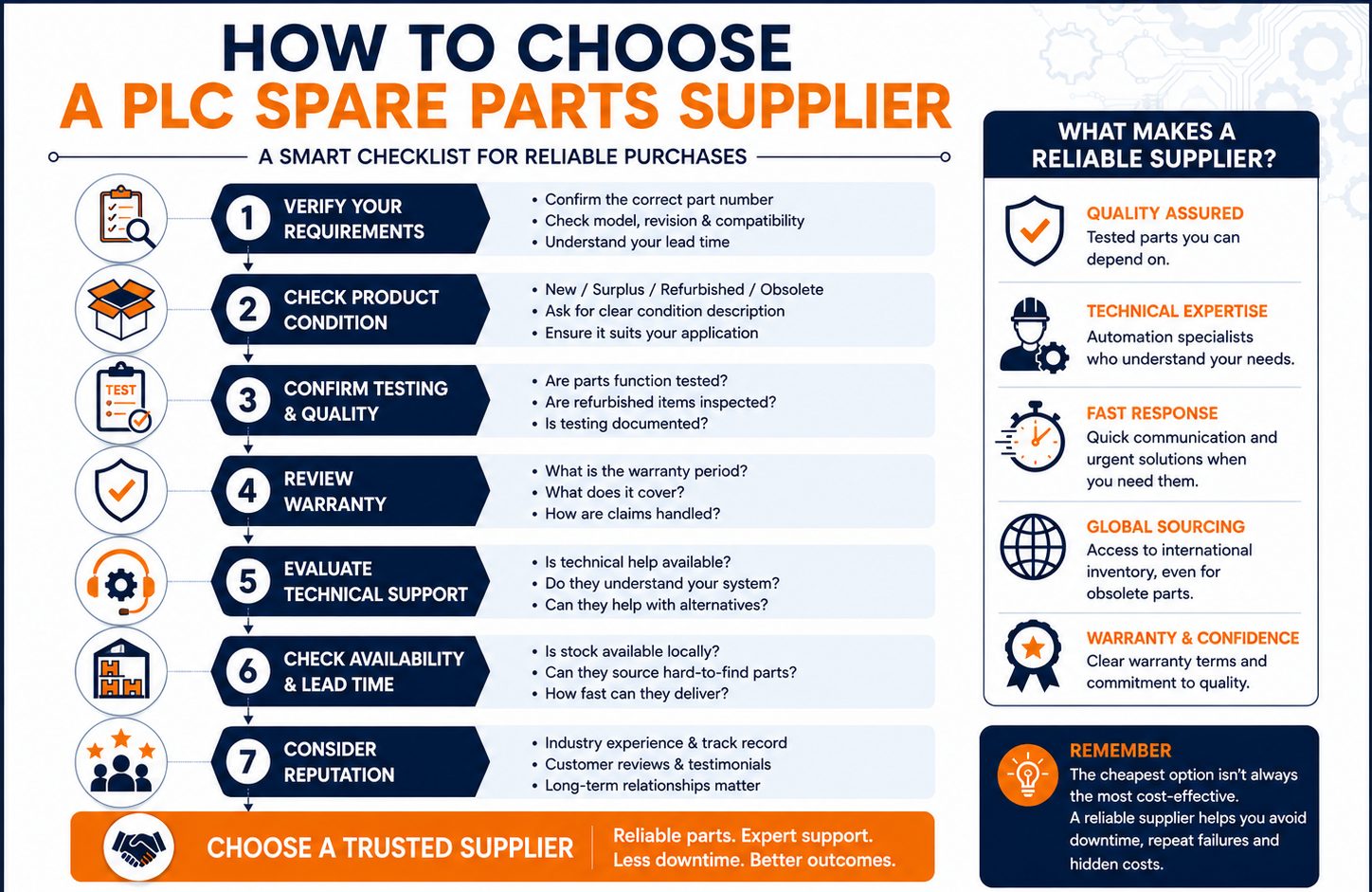
Always ask whether components are:
A reputable supplier should clearly explain the condition of every item rather than leaving customers to guess.
Quality testing is one of the most important factors when purchasing industrial automation equipment.
Ask suppliers:
Testing reduces the likelihood of receiving defective equipment and helps minimise installation issues.
A good supplier should understand industrial automation—not simply sell part numbers.
Experienced teams can help:
Technical expertise often saves valuable troubleshooting time.
Unexpected failures rarely happen at convenient times.
Ask suppliers:
A supplier with a strong sourcing network can significantly reduce downtime.
Always understand the warranty before purchasing.
Questions to ask include:
Clear warranty policies provide greater confidence when purchasing replacement equipment.
| What to Compare | Reliable Supplier | Potential Risk |
|---|---|---|
| Product Testing | Function tested before dispatch | Unknown condition |
| Technical Support | Experienced automation specialists | Order processing only |
| Warranty | Clear warranty terms | Limited or unclear coverage |
| Inventory | Access to local and global stock | Limited availability |
| Lead Time | Fast sourcing options | Extended production delays |
| Communication | Responsive and knowledgeable | Slow or inconsistent updates |
 Supplier Evaluation Checklist
Use this checklist before selecting a PLC spare parts supplier:
Choosing the right supplier is about much more than finding the lowest price.
Price is always important, but the cheapest option isn’t always the most cost-effective.
A lower-priced component that fails prematurely or arrives without testing may ultimately result in:
When production is at risk, reliability often delivers better long-term value than simply selecting the lowest price.
Precision Logic & Control supports manufacturers across Australia by supplying new, surplus and obsolete industrial automation components from leading global manufacturers.
Our experienced team assists customers with:
We work closely with maintenance teams, procurement professionals and engineers to help minimise downtime and source reliable replacement automation equipment quickly.
Testing helps verify that replacement components are operating correctly before installation, reducing the likelihood of unexpected failures.
A supplier with Australian support can often provide faster communication, local assistance and quicker delivery while still accessing global inventory when required.
Yes. Many discontinued automation components remain available through specialist suppliers with established international sourcing networks.
Choosing a reliable PLC spare parts supplier is about more than purchasing a replacement component. Product quality, testing, technical expertise, warranty and availability all contribute to reducing downtime and improving the long-term reliability of your automation systems.
By working with an experienced supplier, manufacturers can respond more confidently to unexpected failures while planning for the future of their industrial automation equipment.
© Copyright 2026. Precision Logic & Controls All Rights Reserved.