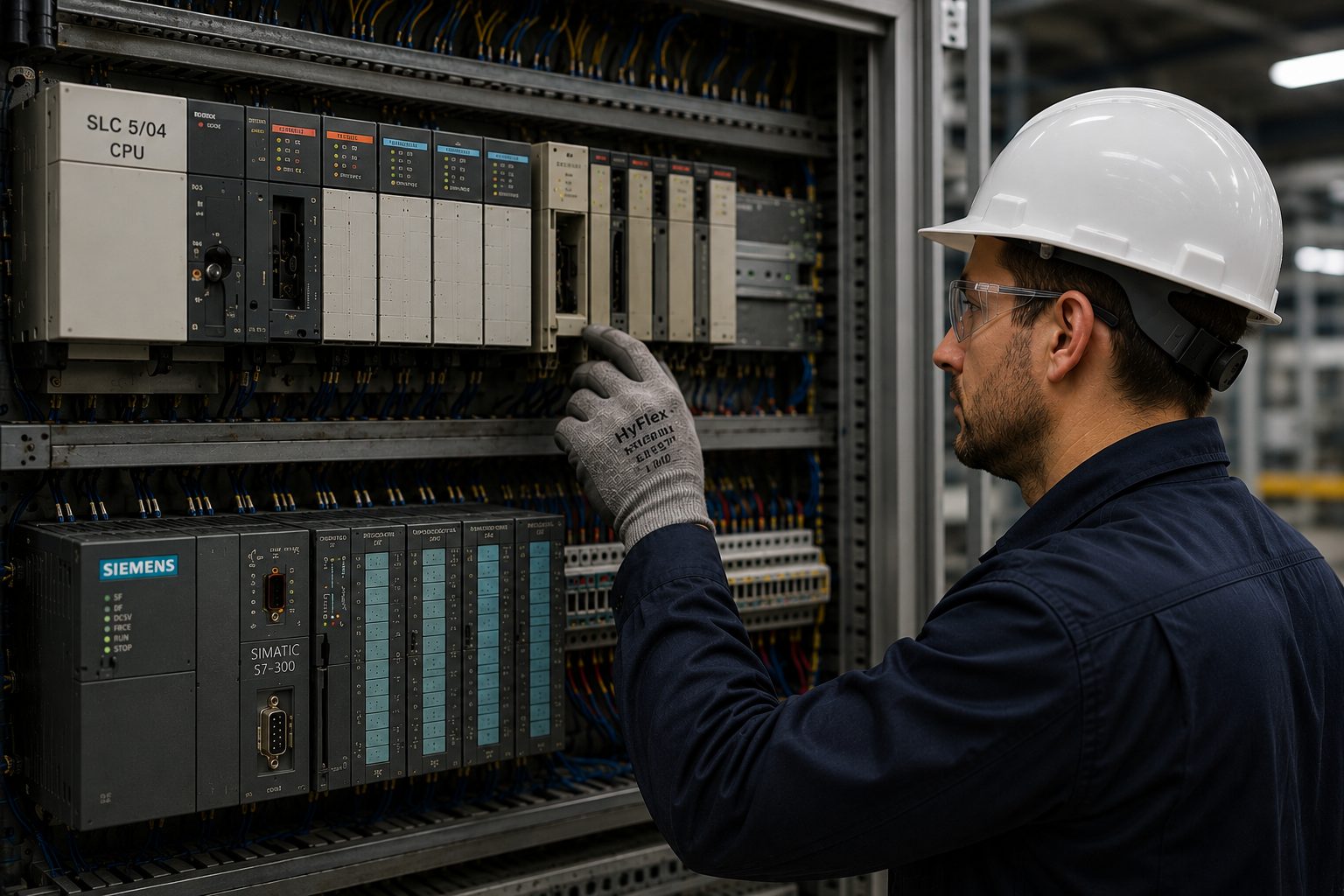
If you’ve worked in industrial automation for any length of time, you’ve probably seen production lines still operating on PLC systems installed 15, 20 or even 30 years ago. While technology continues to evolve, many Australian manufacturers continue relying on legacy PLC systems every day.
Contrary to popular belief, older automation equipment isn’t always a problem. In many cases, these systems remain reliable, stable and perfectly suited to the production process they were designed to control.
The key is understanding when it makes sense to maintain existing equipment and when it’s time to plan for an upgrade.
A legacy PLC system is an automation platform that has reached the later stages of its product lifecycle. The manufacturer may no longer produce new hardware or provide ongoing technical support, but the equipment continues to operate successfully in the field.
Examples include older Allen-Bradley, Siemens, Mitsubishi Electric, Schneider Electric and Omron platforms that remain common across Australian manufacturing, mining, water treatment and infrastructure facilities.
Many legacy PLCs have operated continuously for decades with minimal maintenance. If a system performs reliably and meets production requirements, replacing it simply because it is older often provides little operational benefit.
Replacing an automation system involves more than purchasing new hardware.
A complete upgrade may require:
For many businesses, these costs outweigh the benefits of an immediate replacement.
Planned upgrades usually require scheduled shutdowns. For facilities operating around the clock, every hour of downtime has a direct impact on production and revenue.
Maintaining an existing system while planning a staged migration is often the lower-risk option.
Many industrial processes have remained unchanged for years. If the production requirements haven’t changed, an older PLC can continue performing effectively without requiring a complete redesign.
Although legacy equipment can remain reliable, it also introduces new challenges.
These include:
Having a strategy for managing these risks is essential.
Businesses can maximise equipment lifespan by:
A proactive maintenance strategy reduces unexpected downtime and provides greater flexibility when planning future upgrades.
Precision Logic & Control supports Australian manufacturers by supplying new, surplus and obsolete automation components from leading brands including Allen-Bradley, Siemens, Mitsubishi Electric, Schneider Electric, Omron, ABB, Fanuc and many more.
Whether you’re maintaining a legacy production line or planning a future automation upgrade, our experienced team can help source reliable replacement components and minimise costly downtime.
Yes. Many legacy PLC systems continue operating reliably for years when properly maintained and supported with suitable spare parts.
Not necessarily. If the system remains reliable and replacement components are available, continuing to operate the existing equipment may be the most cost-effective option.
Maintaining spare parts, scheduling regular inspections and planning future upgrades before failures occur can significantly reduce operational risk.
Legacy PLC systems remain an important part of Australian industry. While newer technologies offer additional features, older automation platforms continue providing dependable performance across many manufacturing environments.
The right maintenance strategy, combined with access to reliable replacement parts, allows businesses to maximise the value of existing equipment while planning future upgrades on their own terms.
© Copyright 2026. Precision Logic & Controls All Rights Reserved.